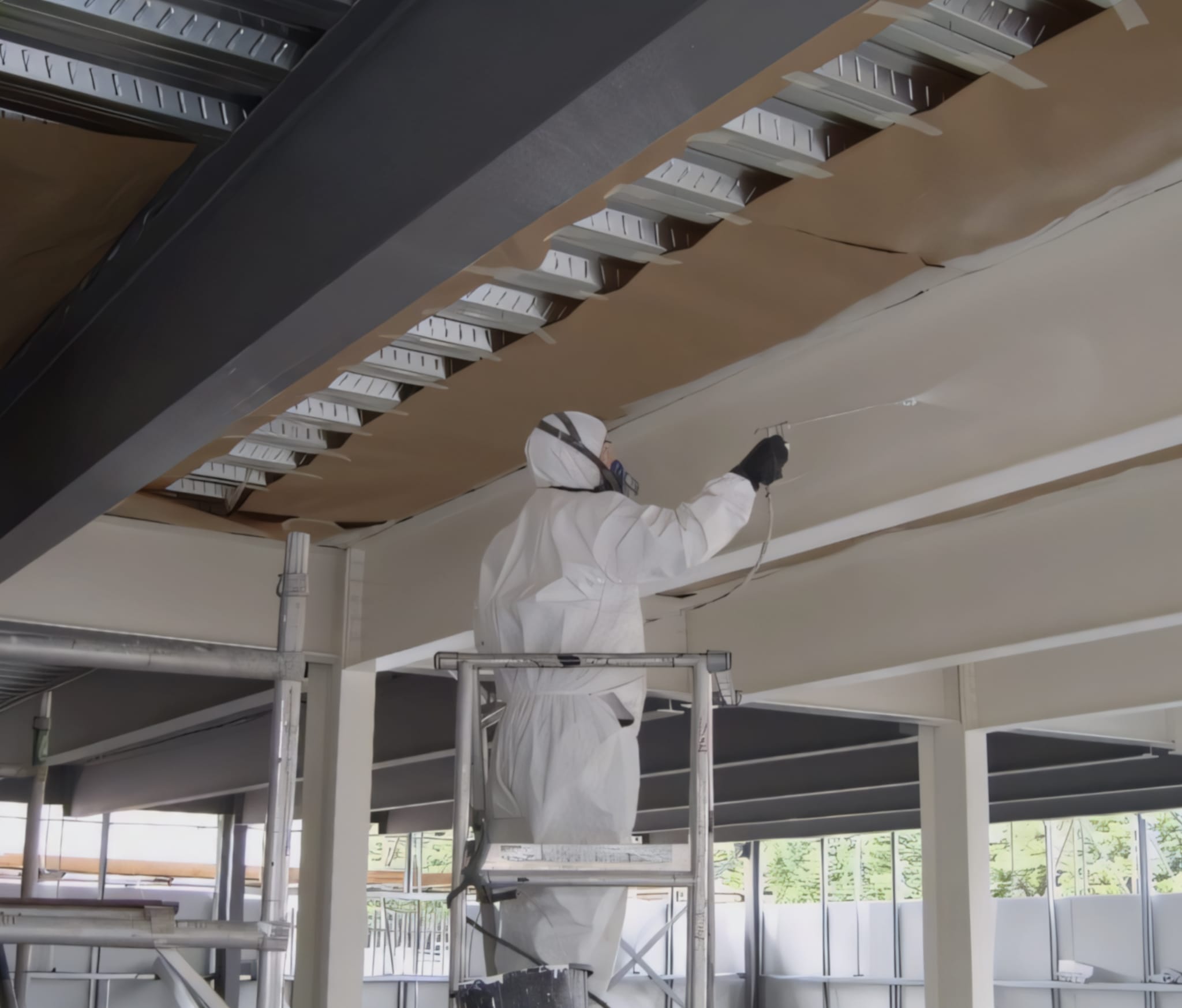
How Intumescent Coatings Protect Structural Steel
Intumescent coatings are a key element of fire protection in modern commercial construction. For developers, architects, and engineers, they provide a reliable way to achieve fire resistance rating requirements while maintaining architectural design flexibility.
Understanding how these coatings work, and how they are applied, is essential for ensuring compliance and long-term performance.
What Are Intumescent Coatings?
Intumescent coatings are a type of fire protective coating designed to expand when exposed to high temperatures.
When a fire occurs, the coating reacts to heat and forms a thick, insulating char layer. This layer protects the underlying steel from reaching critical temperatures where structural failure can occur.
This makes intumescent coatings one of the most effective solutions for structural steel fire protection.
Why Structural Steel Needs Fire Protection
Steel is strong and durable under normal conditions, but its performance changes significantly under heat.
At temperatures above 500°C, steel begins to lose strength. Without protection, structural elements can fail in a relatively short time.
Intumescent coatings provide the necessary insulation to:
- Slow heat transfer
- Maintain structural integrity
- Allow time for evacuation
- Meet NZ Building Code fire requirements
Types of Intumescent Coatings
There are two main types used in commercial construction.
Thin Film Intumescent
These coatings are typically used in architectural applications where aesthetics are important. They provide a smooth finish and can be top-coated for decorative purposes.
Cementitious Fire Protection
These are thicker, more robust systems often used in industrial environments. They are less focused on appearance and more on durability.
The choice depends on the project requirements, environment, and design intent.
Achieving Fire Resistance Rating (FRR)
Intumescent coatings are applied to achieve specific fire resistance ratings, such as 60, 90, or 120 minutes.
The required thickness depends on:
- Steel section size
- Load requirements
- Fire exposure conditions
Fire engineers specify the required system, and it must be applied precisely to meet compliance.
The Importance of Dry Film Thickness (DFT)
Dry film thickness testing is critical to ensuring performance.
If the coating is too thin, it will not provide adequate protection. If it is too thick, it may crack or fail.
DFT testing ensures that:
- The correct thickness is achieved
- The system meets specification
- Compliance requirements are met
This testing is typically carried out by qualified inspectors, often with NACE certification.
Surface Preparation and Application
Proper surface preparation is essential for coating performance.
This may involve:
- Abrasive blasting
- Sandblasting services
- Removal of rust and contaminants
Once prepared, the coating is applied either onsite or in a controlled environment.
Application quality directly impacts performance, making experienced applicators essential.
Architectural and Design Benefits
One of the major advantages of intumescent coatings is their ability to support exposed steel designs.
Architects can:
- Leave steel elements visible
- Achieve clean, modern finishes
- Combine fire protection with aesthetics
Topcoats can also be applied to enhance durability and appearance.
Common Issues on Site
Despite their benefits, intumescent coatings can present challenges if not managed properly.
Common issues include:
- Incorrect thickness application
- Poor surface preparation
- Damage during construction
- Inadequate inspection and testing
These issues can lead to compliance failures and costly remediation.
Maintenance and Long-Term Performance
Intumescent coatings require ongoing maintenance to ensure performance.
This includes:
- Regular inspections
- Repair of damaged areas
- Recoating if necessary
Proper maintenance ensures that fire protection remains effective over the life of the building.
Conclusion
Intumescent coatings are a critical component of structural fire protection in commercial buildings. They provide a reliable and flexible solution for achieving fire resistance requirements while supporting modern architectural design.
For developers, ensuring correct specification, application, and testing is essential for compliance and long-term performance.